English subtitles available
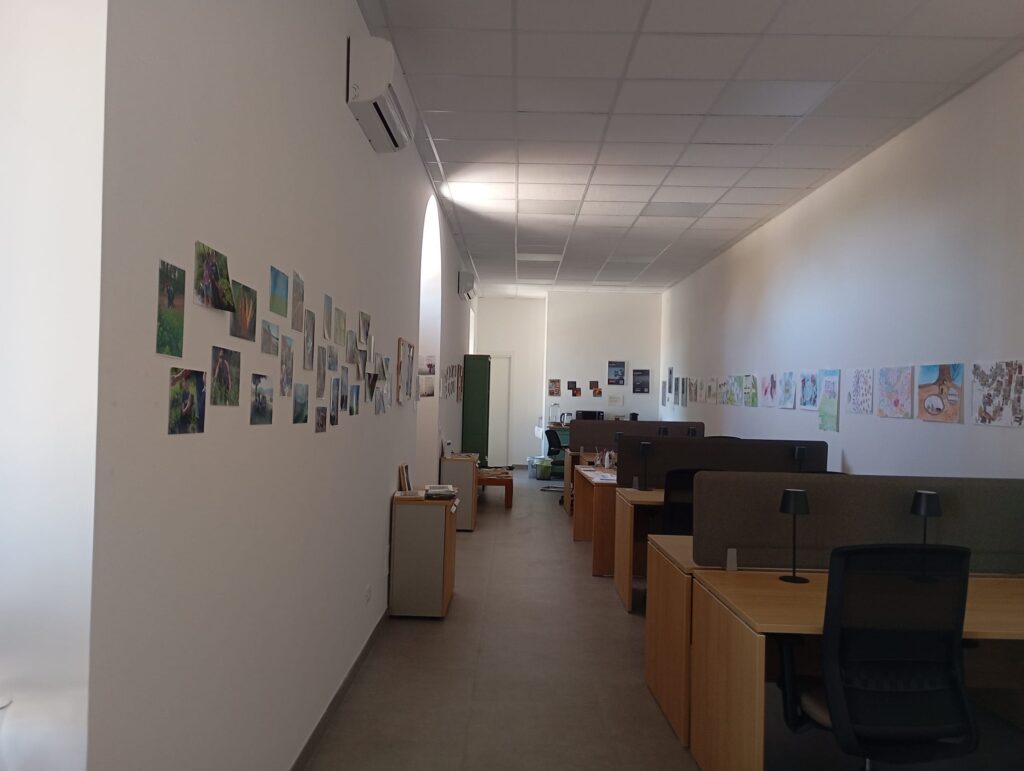
When the Officine Municipali in Bracciano opened as a free coworking space, the idea was simple: somewhere to study and work. A few months on, the space is becoming something more. Students and young people come every day, stay for hours, return, and increasingly take part in the life of Terrae Vivae around them. With Navdanya International as managing partner and the Municipality of Bracciano as a committed ally, the Officine are becoming the Terrae Vivae Hub, a civic home where ecological learning, everyday life and democratic participation meet.
Why a hub
Around Lake Bracciano, as in so many territories, the difficulty has rarely been a lack of solutions. There are farmers practising agroecology, teachers opening their classrooms to the land, young people ready to act, and institutions willing to listen. What is often missing is a place where these relationships can meet and keep meeting. Industrial food systems thrive on fragmentation: they separate people from nature, farmers from citizens, schools from the land, youth from the decisions that shape their territory. A shared civic space is one of the most concrete ways to mend those separations. The Hub is not an addition to Terrae Vivae. It is the connective tissue that allows everything else to hold together and endure.
From a school year to a public voice
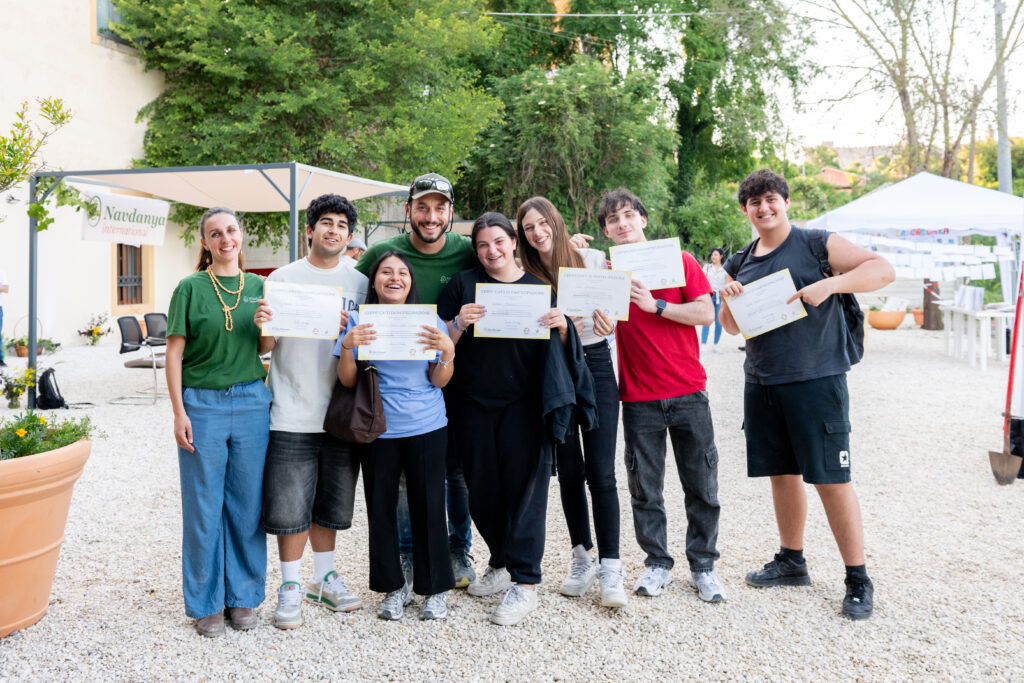
A turning point came on 23 May with Youth & Territory: Pathways in Agroecology and Citizenship. Students, teachers, local farmers, residents and representatives of local institutions gathered at the Officine to talk about the future of Lake Bracciano through agroecology and active citizenship. The students brought a whole year of ecological exploration with them, and they did not present it as schoolwork. They carried their knowledge, questions and proposals into a public space and shared them as members of their community. This is the passage Terrae Vivae works for: from learning to read the relationships that sustain life, to taking part in caring for them. Youth & Territory closed a school year, and it opened a lasting relationship between young people and the Officine.
A space that is lived in
A community space comes alive when people stop visiting it and start inhabiting it. The first monitoring data suggest this is already happening. Between 4 June and 31 July 2026, over 35 opening days, the coworking space recorded 209 visits by 99 different people, around six people a day and roughly 880 hours spent together in the space. The average visit lasted 4 hours and 13 minutes, and almost 40% of visits lasted five hours or more. People are not passing through; they are choosing to spend their days here. A core community is also taking shape: 38 people returned at least once, 23 came three times or more, and nine came at least five times. What these numbers describe is not attendance but rootedness.
Young people as protagonists
The most striking finding is how naturally young people have made the space their own, a place to be together outdoors while staying connected to their work and to one another. They already know what they need from a shared space. The next step is to give that knowledge room to shape the Hub itself. One day each week will be opened to activities that young people propose, organise and run: workshops, meetings, music, art, training, or new ways of spending time together that grow from their own interests. This is not a programme designed for young people. It is a programme they co-create, and with it comes a share in the responsibility for the space.
Seasons of gathering
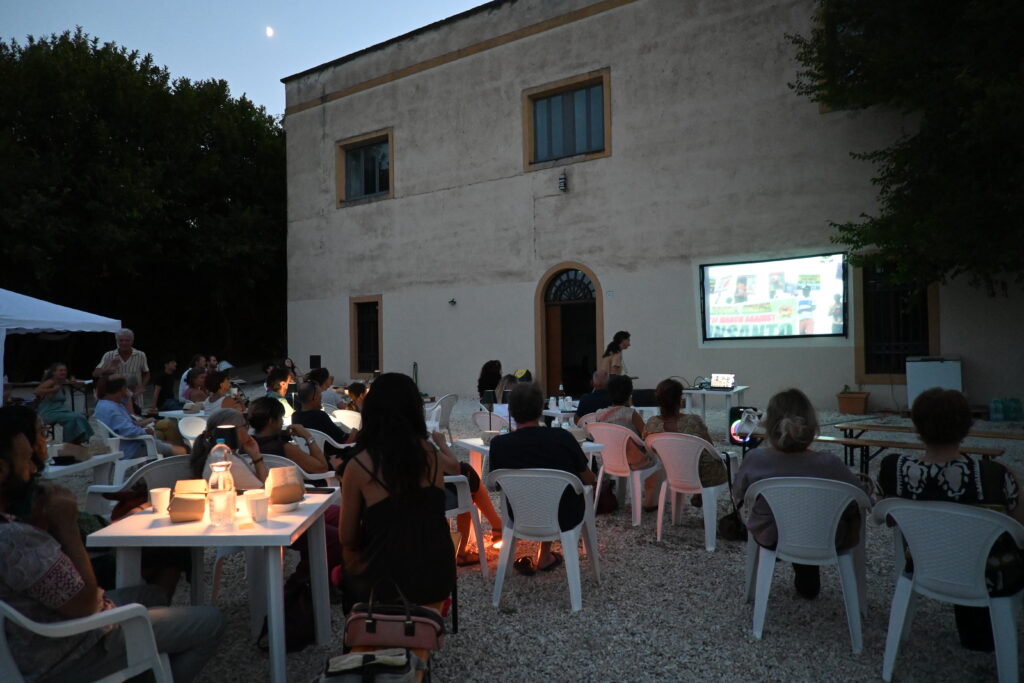
Alongside daily life at the Officine, public events are drawing a widening circle. The latest evening of Le stagioni di Officine (The Seasons of Officine) brought together more than 70 people: young people, residents, local producers, restaurant owners and local organisations. Producers shared what short supply chains and a circular local economy can mean in practice, and a screening of The Seeds of Vandana Shiva connected concerns close to home with struggles for seed and food sovereignty worldwide. Events like these are not a calendar of activities. They are how relationships are woven, how knowledge circulates, and how a building becomes a known place to meet and act.
One model, two soils
Terrae Vivae is not a local project. It grows from Navdanya’s decades of work in India, where community seed banks, women’s collectives and Earth University have shown how living knowledge can regenerate land and community, and it translates that method into the soil of Lake Bracciano. Learning travels in both directions. What young people, farmers and institutions are discovering here returns to a wider international community of practice, just as experience from India enriches the work in Italy. It is an international process, grounded in one territory.
From Bracciano to the world, and back
October brings this connection into sharp focus. The 54th plenary session of the UN Committee on World Food Security (CFS) meets at FAO headquarters in Rome from 19 to 23 October 2026. The following day, 24 October, Bracciano will host Agroecology and Regenerative Communities, welcoming delegates from the CFS, the Sustainable Development Forum, the Italian Ministry of the Environment and Energy Security (MASE), the Italian Buddhist Union and other environmental organisations. The aim is to bring the international debate into a real territory, and to carry the experience of that territory back into the global conversation. A territory brings to such a conversation something no position paper can: named farmers, working relationships, and young people speaking from their own experience.
Where this is going
Terrae Vivae begins from the understanding that communities are living ecosystems, shaped by local and global forces alike, and able to regenerate through participation, knowledge, relationships and shared responsibility. The Officine Municipali give that understanding a physical home, where daily work, ecological education, civic life and international dialogue come together. Transition is not delivered to a community; it is grown by one. It is still early, but the direction is clear: from coworking space to meeting place, from meeting place to community, and from community to a space that plans and acts for its territory while remaining in conversation with the world.
Photo credits: Maela Bonafede
Project « Coworking Space Bracciano » – CUP F11I24000190009 – co-funded by the European Union under the Lazio ESF Regional Programme 2021–2027, Priority 1 Employment, Specific Objective ESO4.2, Key Action (AC) 19, « Officine Municipali » Call for Proposals, DD G05680/2023. Beneficiary: Municipality of Bracciano. Managing partner: Navdanya International ETS.
CUP: F11I24000190009 – Sigem Code: 23019DC000000106
