

Centered on practical and theoretical training, the ecological education project promotes a deeper understanding of the interconnections between soil health, biodiversity, and human well-being, offering a holistic perspective on sustainability. Students engage in hands-on projects such as organic farming, permaculture, and natural resource stewardship while developing skills that contribute to a future in harmony with the Earth. Through direct, on-the-ground experiences with experts and activists, the program seeks to raise awareness among young people about the need to transform living patterns to ensure an ecological and resilient future.
Program Goals
- Build Foundational Ecological Knowledge: Equip students with a comprehensive understanding of key ecological themes, including soil health, seed diversity, sustainable food systems, water conservation, and forest stewardship.
- Promote Environmental Stewardship and Active Citizenship: Inspire students to take responsibility for their local ecosystems and actively participate in sustainable practices that enhance the health and resilience of their communities.
- Develop Practical Skills in Conservation and Regenerative Practices: Through hands-on activities, workshops, and field visits, provide students with practical skills in conservation, regenerative agriculture, and resource management that can be applied in real-life settings.
- Foster a Sense of Place and Community Connection: Encourage students to develop a deeper understanding of their environment, food production systems, and rural communities through direct observation. Strengthen their connection to local landscapes and cultures, fostering an appreciation of traditional ecological knowledge and community-driven solutions.
- Encourage Reflection and Critical Thinking: Through reflective activities and discussions, challenge students to explore the global implications of local environmental issues and think critically about sustainable solutions.
This program, supported by the Ecology Agenda of the Italian Buddhist Union and implemented in collaboration with local schools, offers high school students participating in school-to-work programmes a unique opportunity to learn ecological and sustainable practices while actively contributing to the creation of ecological communities.
„This project builds on the legacy of the Biodiversity is Life project, funded by the 8×1000 of the Italian Buddhist Union, and runs in parallel with other initiatives developed in conjunction with the Ecology Agenda of the Italian Buddhist Union over the past three years. This ambitious effort has engaged hundreds of students in educational journeys aimed at fostering full ecological awareness.“ (Terrae Vivae: ecological communities in transition, by Manlio Masucci, GATE – Il portale dell’Unione Buddhista Italiana).
Activities – 2nd semester
 Introductory Workshop
At the start of the new school year, students from the Agricultural Institute took part in the first session on agroecology, led by Navdanya International. The goal was to introduce the principles of agroecology as a response to the challenges of modern agriculture. Through an open discussion, students reflected on the sector’s difficulties and possible solutions, identifying four key themes: climate change, economic hardship, pollution, and the reduction of farm inputs. Many discovered the concept of agroecology for the first time, summarizing its meaning with a phrase: “For me, agroecology is the balance between agriculture and the environment.”
Agroecology as a Living Journey:
Learning from the Soil, Learning from Each Other
 The learning journey continued outdoors, in the San Celso woodland, where students turned observation into discovery as they explored the colour, structure, and biodiversity of the soil in small groups. By examining how the ground absorbs rain, how roots breathe, and the scent of organic matter, they learned to recognize in subtle sensory details the signs of living versus degraded soil. In the undergrowth—among ivy, oaks, ferns, and wild grasses—biodiversity emerged as the foundation of fertility and ecological resilience, grounding their observations in concrete connections to climate change, economic hardship, pollution, and the regenerative practices discussed back in the classroom.
English subtitles available
Workshop at Faraoni Farm
 The students explored the role of soil in regenerative agriculture, starting from Andrea Cippitelli’s account of how the farm was transformed through rational grazing and the connection between animal well-being and the quality of the cheeses produced on site. Out in the pasture, they observed how rotational grazing is managed, the “fertility patches” created by the herd, and the rich plant cover, linking biodiversity with the system’s resilience. Working in small groups, they carried out analyses of the soil and its context (colour, smell, moisture, roots, pH, drainage), discovering a living, well-structured soil able to hold water without stagnation. The experience consolidated their theoretical knowledge, showing how mindful management choices can regenerate the land and strengthen the relationship between soil, animals, and the local community.
Composting as a practice of caring for the soil
 Within the ecological education journey with the Technical Agricultural Institute of Bracciano, the workshop at the organic farm Le Bricchiette offered students the chance to discover soil as a living system and to experiment with composting as a concrete practice of regeneration. Through creating and monitoring a compost pile, checking its temperature and carrying out the first turning, the students were able to closely observe the role of microorganisms in transforming organic matter into fertility. The work then continued with the preparation of the “Teku Cana” microorganism accumulator and mulching activities, linking the management of organic matter with moisture conservation, microbial biodiversity, and the reduction of external inputs. By connecting these practices with soil assessment and agroecological consulting, the workshop showed how agroecology can become a professional tool for caring for the land and supporting the transition toward more resilient farming systems.
Understanding the Invisible Life of the Soil

As part of the ecological education programme with the Bracciano Technical Agricultural Institute, one activity focused on the role of soil microorganisms. Students prepared a microbiological biofertilizer called Teku Cana, a concentrate of local microorganisms aimed at regenerating the soil’s microbial biodiversity, by gathering forest litter and preparing a mixture of bran, molasses and water to trigger biological fermentation processes. The activity helped participants learn to read the soil as a living ecosystem, encouraging a paradigm shift away from conventional farming.
Final presentation:
a year of agroecology, told by the students
 At the event „Youth & Territory: Pathways in Agroecology and Citizenship,“ held on May 23, 2026 at the Officine Municipali in Bracciano, the Salvo D’Acquisto Agricultural Institute presented its year-long experience of training in agroecological practices, with a stand showcasing student work ranging from soil analysis and business case studies to composting and the preparation of a microorganism concentrate. The event highlighted how the programme allowed students to put into practice what they study in class every day, offering a concrete understanding of the working world and the skills needed for those considering a future in agronomy.
Also read:
Terrae Vivae: The Agronomists of the Future
Soil, Seed and Life: Why World Soil Day Matters Now More Than Ever
Terrae Vivae: Regenerating Communities through Agroecological Action
Activities – 1st semester
 Understanding the Land to Shape the Future
of Local Communities
The ecological education program, part of the School of Diffused Agroecology, launched an ecological education program for school-to-work programme students, supported by the Ecology Agenda of the Italian Buddhist Union. Through participatory mapping and a focus on the Bracciano Lake, students developed tools to analyze local ecosystems and build ecological awareness for a regenerative approach to sustainability.
Workshop: Introduction to Agroecology
The school-to-work programme workshop introduced students from Ignazio Vian High School to the concept of agroecology, starting with understanding the meaning of „environment“ and the impact of monoculture over the past 4,000 years. Through interactive exercises and games, participants explored the crucial role of soil as a living ecosystem and regenerative agroecological practices as a key solution to environmental and climate crises.
 Hazelnut Monoculture and Environmental
Impacts in the Tuscia Region: A Critical Analysis
In a session with school-to-work programme students from Ignazio Vian High School, the workshop tackled the environmental impact of large-scale hazelnut monoculture in the Tuscia region. Through active research, students explored environmental consequences, legal frameworks, and corporate strategies, examining regulations on biodiversity and natural resource conservation to understand the need for ecological farming practices.
The Role of Animals in Agroecological Systems
The school-to-work programme workshop, hosted by Azienda Agricola Gentili, provided students with hands-on experience in agro-pastoral agroecology, exploring the role of animals and biodiversity. Through field activities, artisanal cheesemaking, and guided reflections, participants compared local and industrial production, understanding the importance of integrating humans, the environment, and sustainable food production.
From Classroom to Field: Students Explore
Agroecological Systems at the Farmers’ Market
Students concluded months of agroecological studies with a hands-on farmers’ market visit, engaging directly with producers to explore short supply chains, biodiversity conservation, and seed sovereignty. Through dialogues with the producers and an agroecology trail in the forest, they witnessed how regenerative practices link soil health, local ecosystems, and community resilience—applying classroom theory to real-world food sovereignty initiatives.
Celebrating Biodiversity at the ArtiCulturae Farmers’ Market

The second edition of the Biodiversity Festival, organized by Navdanya International in collaboration with the ArtiCulturae market in Manziana, offered a morning dedicated to ecological education and caring for the Earth. The event marked the conclusion of an educational journey involving young participants in Navdanya International’s projects, who throughout the year explored themes such as biodiversity, agroecology, local food systems, and water as a common good. The day included welcoming activities, environmental-themed games, certificate presentations, and an exhibition of final works created by the project participants. A picnic featuring local products encouraged交流 and connection among youth, families, and the wider community. This initiative helped strengthen ties to the land and fostered in young people a deep awareness of their vital role in ecological and social regeneration, nurturing a shared culture of responsibility toward the Earth.
 Project realized with the support of ‚Ecologia Unione Buddhista Italiana‘, the Ecology Program of the Italian Buddhist Union.
Learn more:
Regenerating Ecological Communities
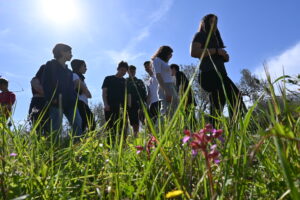 Navdanya International’s educational program fosters ecological awareness and agroecology to build resilient communities. Through educational pathways and hands-on experiences, it engages students, teachers, and citizens in strengthening the connection between biodiversity, culture, and food systems. Rooted in local territories and guided by sustainability, this initiative promotes a deep, place-based education.