
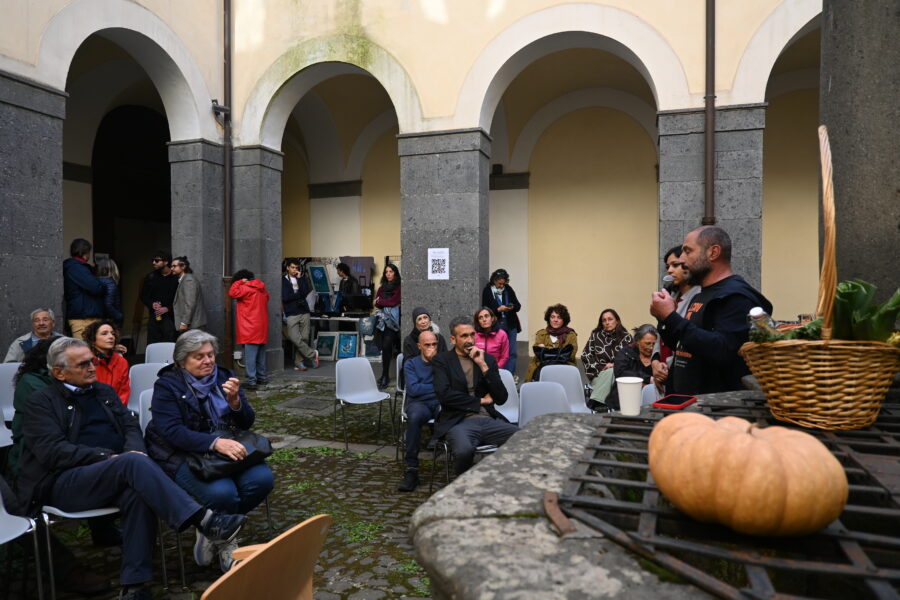
From seed sovereignty to international cooperation, from farms to public spaces: on October 24, a gathering organized by Navdanya International brought grassroots initiatives and institutions into conversation, opening up new possibilities for regenerating the land.
Food system resilience is now at the heart of the international debate. The climate crisis, biodiversity loss, and growing corporate concentration in the food sector make it urgent to build systems that can not only withstand shocks but also transform. The issue was central to the 54th session of the UN Committee on World Food Security (CFS), held at FAO headquarters in Rome from October 19 to 23, and it will continue to shape discussions in the lead-up to COP31, the UN climate conference taking place in Turkey this November. But how can these policy directions be turned into concrete practice? And what role can communities play?
These questions gave rise to “Agroecology and Regenerative Communities: Networks of Resilience Among Youth, Schools, Farmers, and Institutions,” an event organized by Navdanya International on October 24 at the Chiostro degli Agostiniani in Bracciano, under the patronage of the Bracciano-Martignano Regional Nature Park Authority. Farmers, researchers, schools, associations, and institutions all came together around a shared principle: resilience grows out of relationships, not isolated efforts.
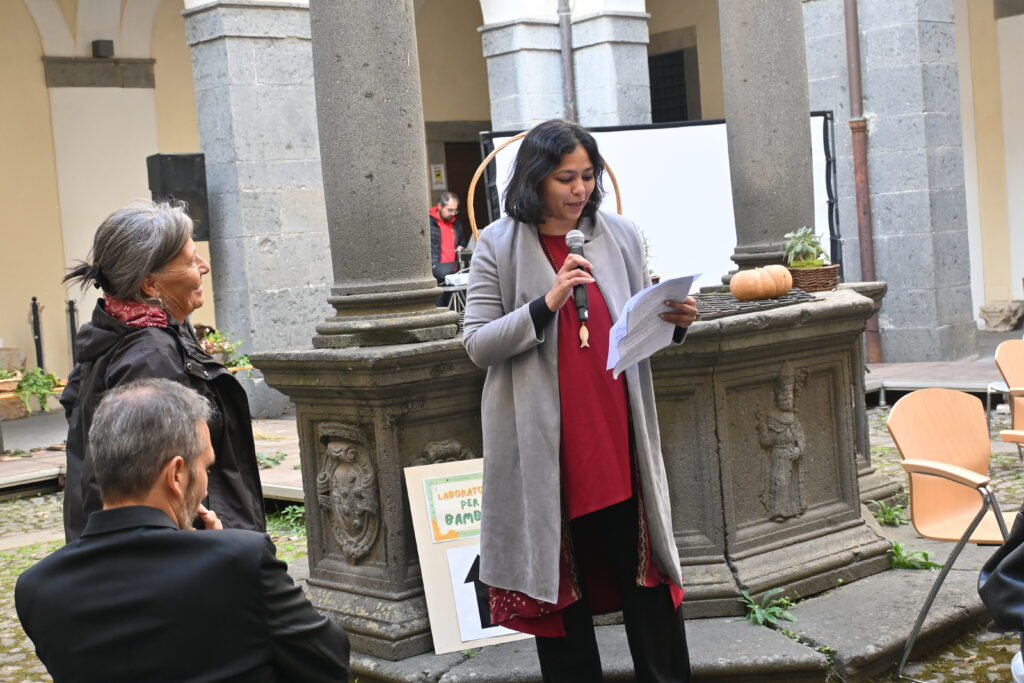
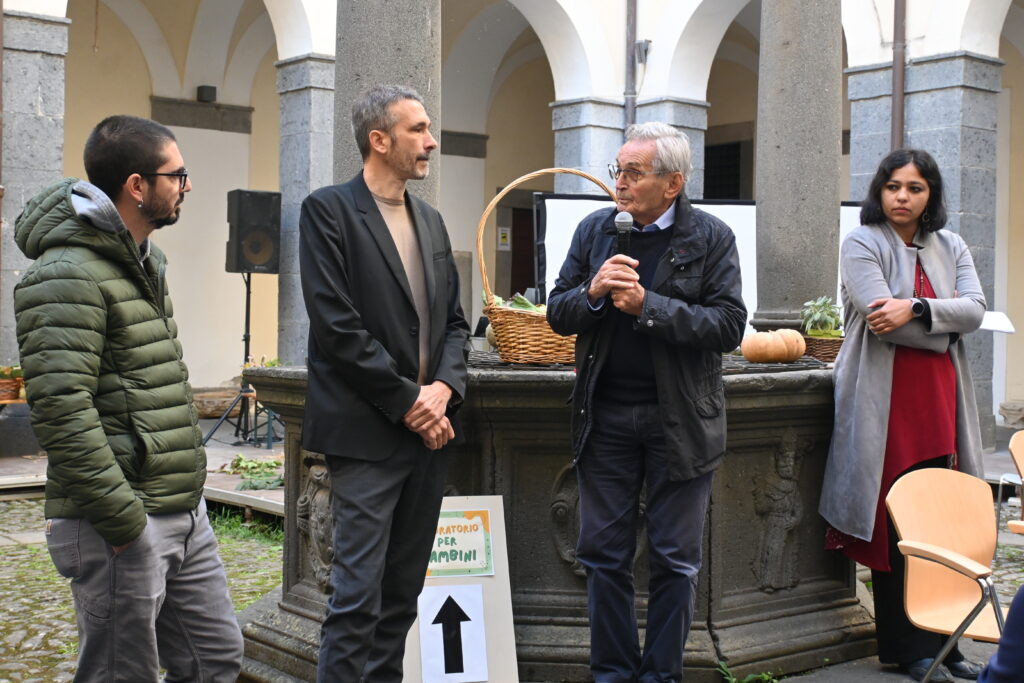
The discussion, moderated by Navdanya International’s director Ruchi Shroff, centered on concrete proposals. These included turning public spaces into community hubs, following the example of Officine Municipali, where cultural events on regeneration and resilience could be held and locally grown agroecological products distributed; experimenting with cultures of resilience on public land to create new circular economy supply chains; and launching a digital platform where organizations belonging to the Sustainable Development Forum can share their activities and proposals.
The event was also an opportunity for Bracciano’s mayor, Marco Crocicchi, to make two important announcements. The first was the opening of a youth center in the same building that houses Officine Municipali. The second was that the process to twin Bracciano with Tubas, a city in the West Bank, is nearly complete, with plans to launch international cooperation projects focused on agroecology.
One key point emerged from the discussion: the agroecological transition cannot rest on the choices of individual farmers or consumers alone. It requires economic, social, and institutional conditions that make those choices possible. Access to land, support for local economies, valuing local knowledge, and giving communities a say in decisions about their own territory are all deeply interconnected. Building resilience therefore also means strengthening people’s collective capacity to organize, work together, and influence the policies and resources that will shape the future of their territories.
Seeds, Biodiversity, and Community Self-Reliance
For agricultural geneticist Salvatore Ceccarelli, protecting biodiversity is the foundation of any path toward regeneration and resilience. In his talk, he traced the shift from systems in which farmers selected, saved, and exchanged their own seeds to an industrial model built on uniform varieties and an increasingly concentrated market. “Uniformity breeds vulnerability,” he said: genetically uniform crops are more exposed to disease and unpredictable weather, and they can require more external inputs.
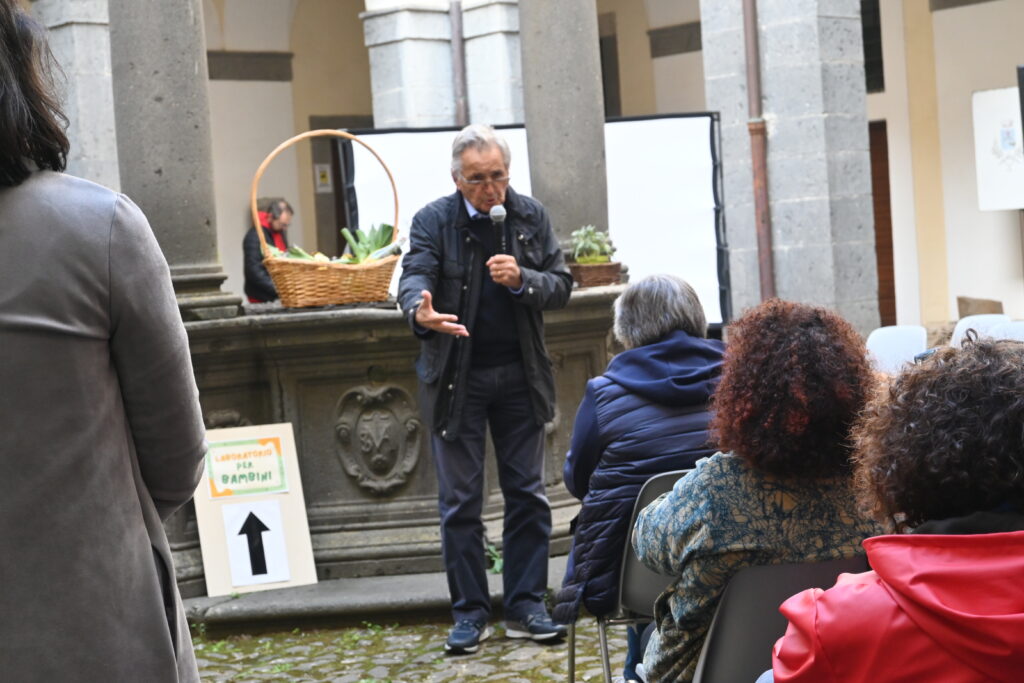
Evolutionary populations and participatory plant breeding point to another way forward: giving farmers back an active role in managing seeds and cultivating diversity that can adapt over time. Seed sovereignty is also an economic and democratic issue.
The link between diversity and self-reliance also came through in the remarks of Caterina Batello, president of the Italian Association of Agroecology (AIDA), who drew attention to the disappearance of small farms and the growing concentration of agricultural activity. The agroecological transition, she argued, means putting farmers back at the center by bringing together research, practical knowledge, fair incomes, and the protection of ecosystems.
Local Networks, Public Spaces, and Policy
But transforming food systems takes more than changing farming practices. It also requires building relationships among farmers, citizens, schools, and institutions, and creating the spaces and tools that can sustain community initiatives over time.
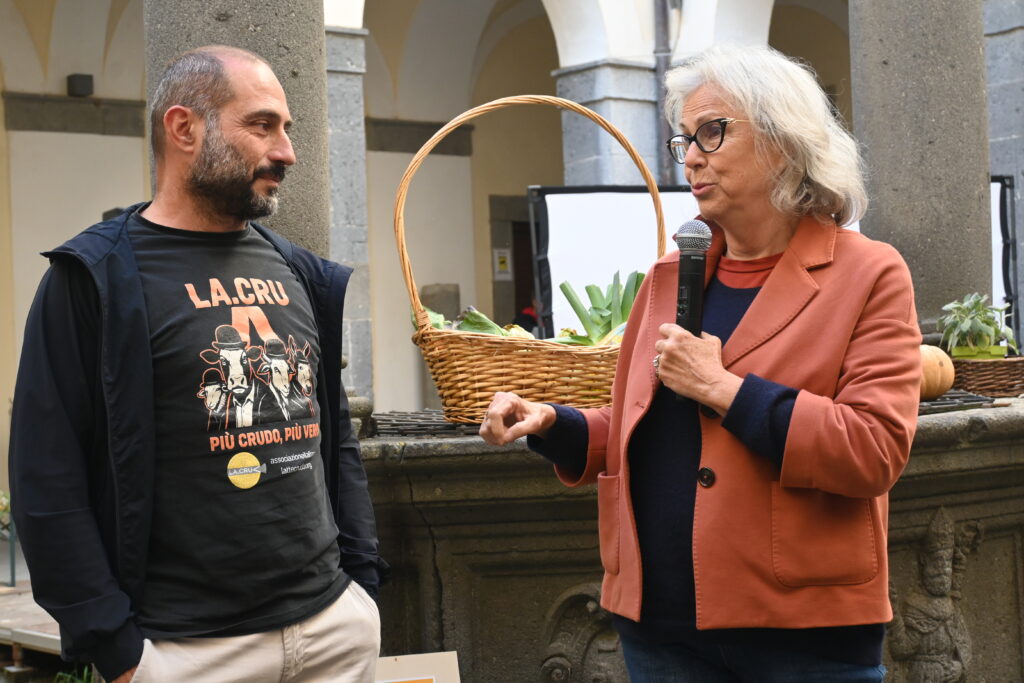
In Bracciano, this approach is taking shape through Terrae Vivae, Navdanya International’s program developed in collaboration with Ecologia – Unione Buddhista Italiana, which weaves together ecological education, agroecology, and community participation. The program brings together schools, farmers, associations, and institutions, creating concrete opportunities for learning and collaboration across the territory.
This work is already producing tangible results: ecological education workshops in schools, training programs that take students to visit local farms firsthand, initiatives with farmers on biodiversity and the agroecological transition, and forums where farmers, citizens, and institutions can exchange ideas. Officine Municipali marks a further step in this direction, providing a physical space where these relationships can grow stronger and give rise to new shared initiatives.
Silvia Francescon, of the Italian Buddhist Union spoke about interdependence as the foundation of an ecological vision that recognizes the deep connections between people, nature, and communities. She highlighted the value of the work built up over time, partly through the ability to bring very different groups together, and the importance of shared spaces as places to cultivate relationships, self-reliance, and new possibilities for collective action. She recalled how hard it had been, at the outset, to imagine a network that would one day include government ministries, the municipality, farmers, schools, and associations. As this network grows, she observed, the way public spaces are used and shared matters too: they can become places that build bonds, self-reliance, and new opportunities to act together.
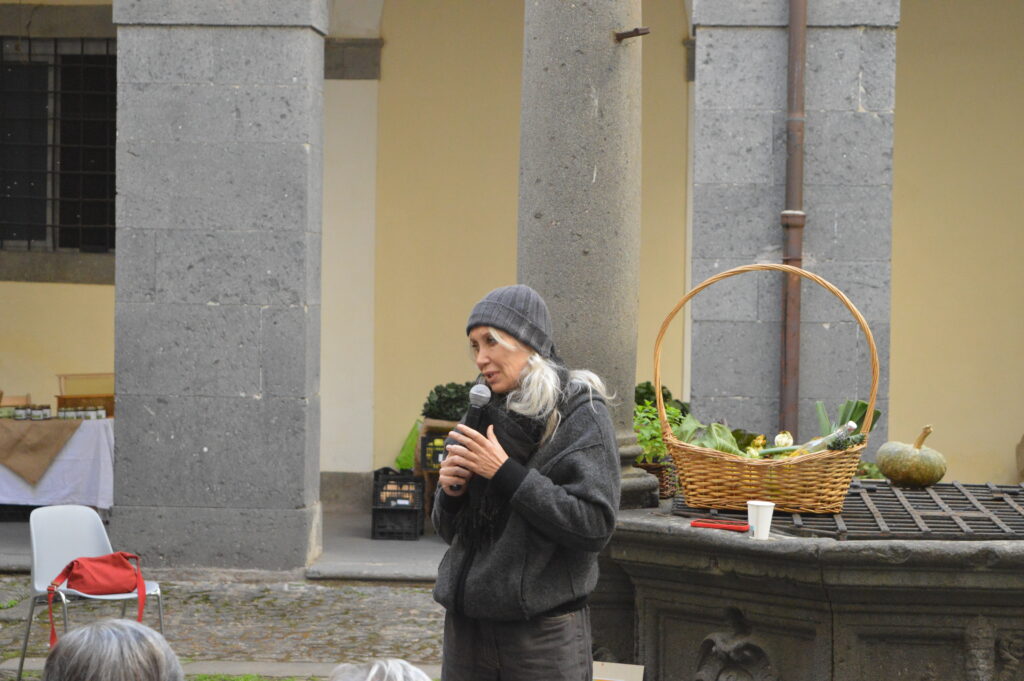
Bracciano’s mayor, Marco Crocicchi, who has supported Navdanya International’s work in the territory from the start, also reflected on this vision. He described collaboration between the town administration and civil society as an essential way to make the most of the community’s resources.
For Crocicchi, institutions play a vital role precisely when they recognize that they cannot be the only players. Their task, he said, is to foster connections between different actors, make spaces available, and create the conditions for initiatives to grow on their own and deliver concrete results.
Officine Municipali in Bracciano is a good example of this collaboration. The town administration restored the public building and opened it to the community, and Navdanya International now serves as its managing partner through a project co-funded by the European Union under the Lazio Region’s 2021-2027 European Social Fund program. With free coworking, cultural events, training, and public meetings, it is fast becoming a hub for participatory planning.
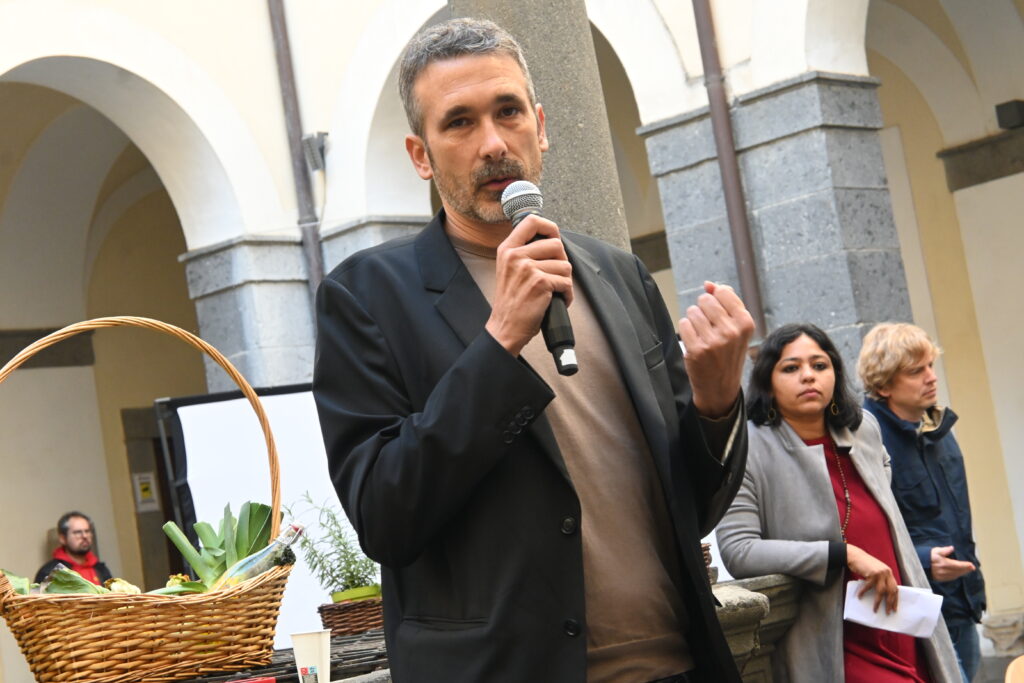
The mayor stressed that restoring the building would not have been enough on its own. It was the associations and groups that bring it to life that turned it into a space open to everyone. He also announced that new funding will allow a youth center to open on the upper floor, creating more opportunities for people to meet and strengthening the connections between the activities already based there.
The network also reaches other cultural projects in the territory, including a partnership with the Bracciano International Film Festival. Organized by GASP and the Papermoon collective, the festival brings together different art forms, community participation, and dialogue.
Mara Cossu and Tiziana Occhino of Italy’s Ministry of Environment and Energy Security (MASE) explored the role institutions can play in building these connections.
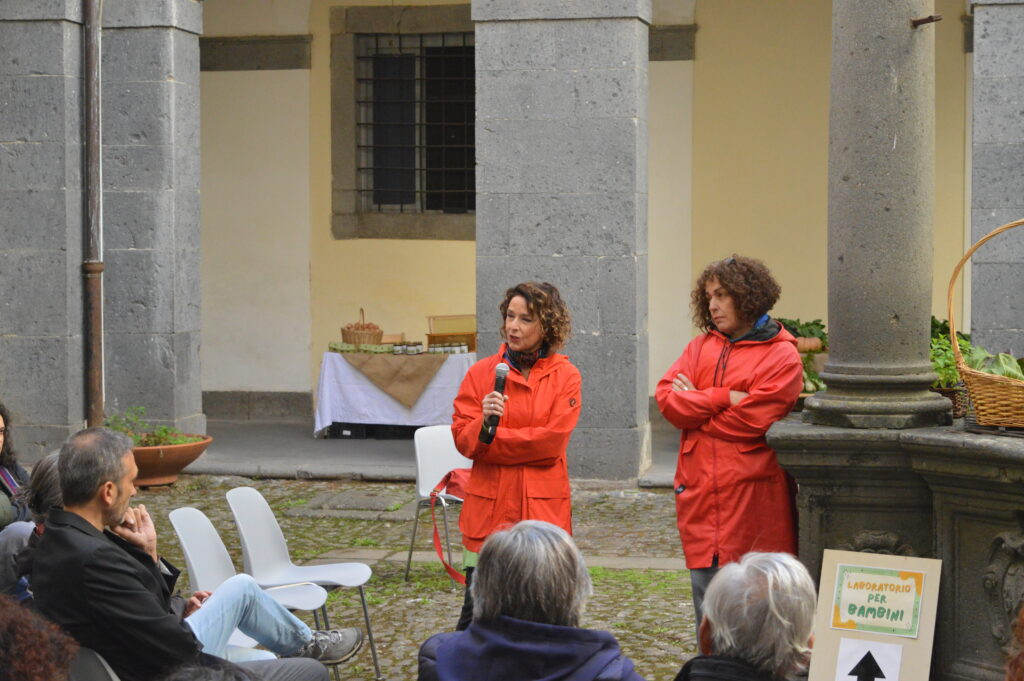
Youth and Territories: Building a Network for Ecological Regeneration
The discussion with MASE picked up where the morning session left off. That session, a round table titled “Youth and Territories: Collaborative Networks for Ecological Regeneration,” was led by Fernanda Marfil and Lorenzo Maggi of Navdanya International as part of the Ministry-co-funded project “RiGenerAzione Ecologica: Cittadinanza e Partecipazione” (Ecological Regeneration: Citizenship and Participation). Alongside the MASE representatives, participants included FELCOS Umbria, AIESEC Italy, CIMA Foundation, Una Mano per l’Ambiente, Cosmofauna, CRAS, the Bracciano Scout group, and FICS, who together laid the groundwork for a network meant to last well beyond the event. Lorenzo Maggi called the Ministry’s presence “essential,” because it helped the associations understand how to engage with institutions.
The organizations work at very different scales, but they share a common need: better connections between local initiatives and wider networks. Groups deeply rooted in their territories want more visibility and new partnerships, while those working at the national, international, or institutional level want closer ties with local communities.
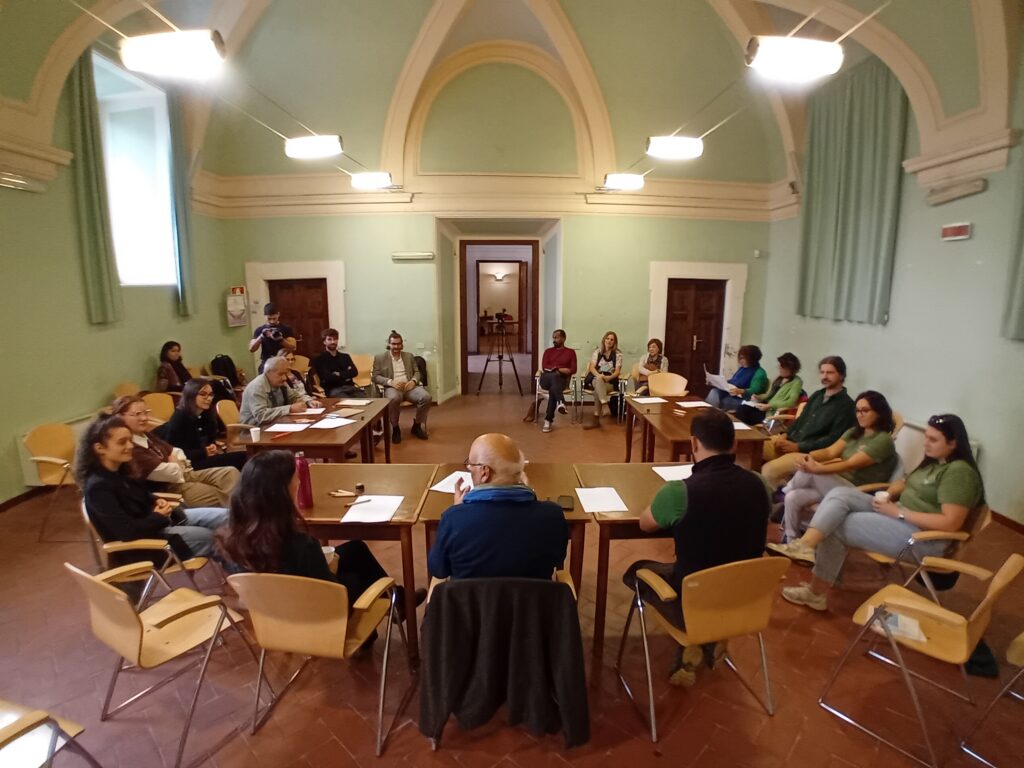
This led to the idea of a shared digital platform, designed to build relationships rather than simply raise visibility. It will be a place to co-design projects, share skills and resources, organize collective training, and keep a common calendar of events and initiatives, while keeping the voices, experiences, and needs of young people and local communities at its heart. Navdanya International has committed to creating and running the platform, and to setting its priorities and ground rules together with the network’s member organizations.
How can these proposals be sustained beyond individual projects? Ruchi Shroff put this question to the Ministry representatives. Cossu pointed to the value of the work it takes to connect people, institutions, and expertise, work that often goes unrecognized. This ability to build relationships, she noted, is one of the cornerstones of Italy’s National Strategy for Sustainable Development, which funds the project. Institutions, she stressed, must learn to “build spaces and bridges,” creating opportunities for communities to come together and develop a shared vision for their territory.
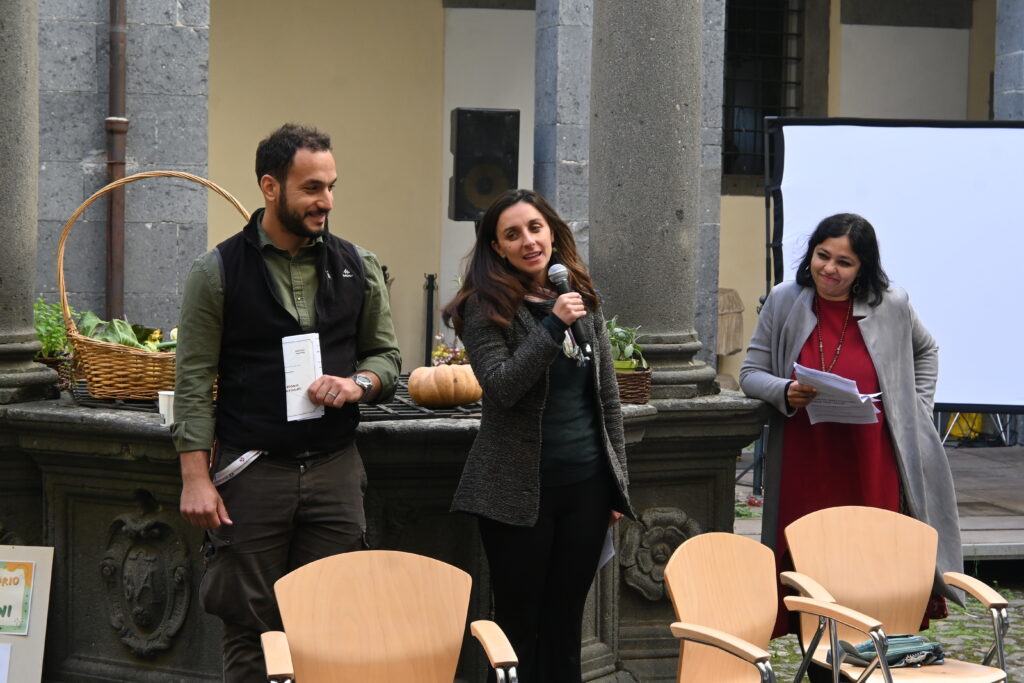
Tiziana Occhino stressed the importance of giving these experiences continuity, above all by recognizing the younger generation’s role as stewards of change. Young people, she reminded the audience, “are the present,” and they must be directly involved in shaping social and ecological change. Part of the role of institutions, she added, is to “keep sowing, and help those who are sowing carry the seeds ever farther,” so that local initiatives can take root and become a shared legacy.
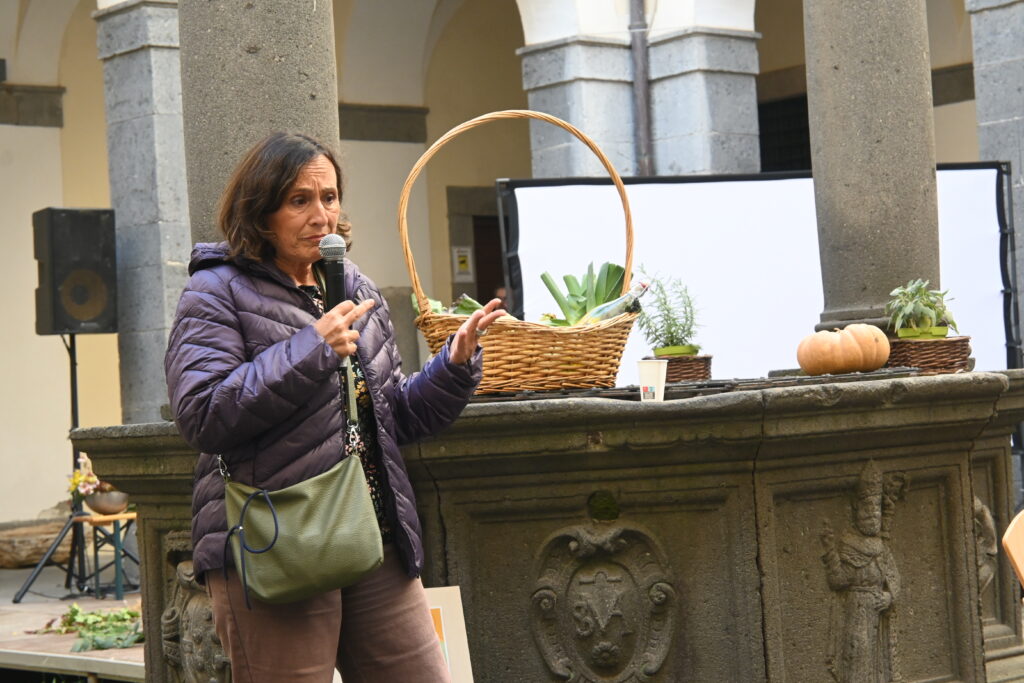
On the agricultural policy front, Silvia Canali of the Ministry of Agriculture, Food Sovereignty and Forestry (MASAF) highlighted the value of territorial processes that bring together farmers, institutions, and citizens. Drawing on the experience of Bio-districts, she underlined the need to move “beyond a purely business-driven, purely production-focused mindset” and build richer forms of collaboration. These districts, she explained, “form networks precisely because of their diversity,” and the wide range of actors involved can become a strength, deepening cooperation and fostering shared paths of territorial development.
From Farms to Local Supply Chains
One of the main reasons for building these networks is the need to support farming and strengthen the local economy. The farmers who shared their experiences showed that the agroecological transition is already a reality on the ground, even as it faces economic, regulatory, and cultural obstacles.
Elena Carone Fabiani of Fattoria Biologica Le Bricchiette spoke about almost thirty years of organic farming built on seasonality, direct sales, and respect for the territory, and about how the farm is now grappling with the disruption climate change has caused to growing cycles.
Mariana Donnola of Azienda Agricola La Argentina showed how rotational grazing can help regenerate ecosystems. She also stressed how hard it is to get consumers to appreciate the time, labor, and value that go into food produced this way.
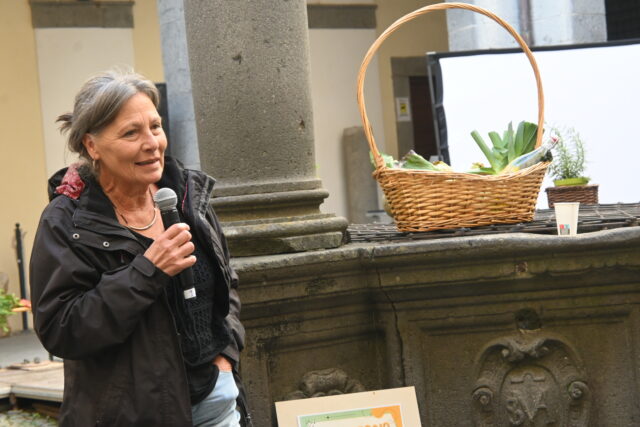
Andrea Cippitelli of Fattoria Faraoni in Sutri described the farm’s conversion from conventional livestock farming to a pasture-based system. According to the farm’s own data, regenerative management has tripled pasture productivity and raised soil organic matter by two percentage points. Yet in an area dominated by hazelnut monoculture, economic and regulatory hurdles still stand in the way of these practices spreading more widely.
Showing that a different kind of agriculture is possible, then, is not enough. It also has to be economically viable and linked to distribution models that guarantee fair prices for farmers and access to good-quality food for everyone.
The Anguillara Solidarity Purchasing Group (GAS), active since 2009, is working toward exactly that. It has built direct relationships with farmers and has since expanded its commitment by founding a Renewable and Solidarity Energy Community, a clear example of how networks built around food can help create new forms of solidarity economy and shared management of resources.
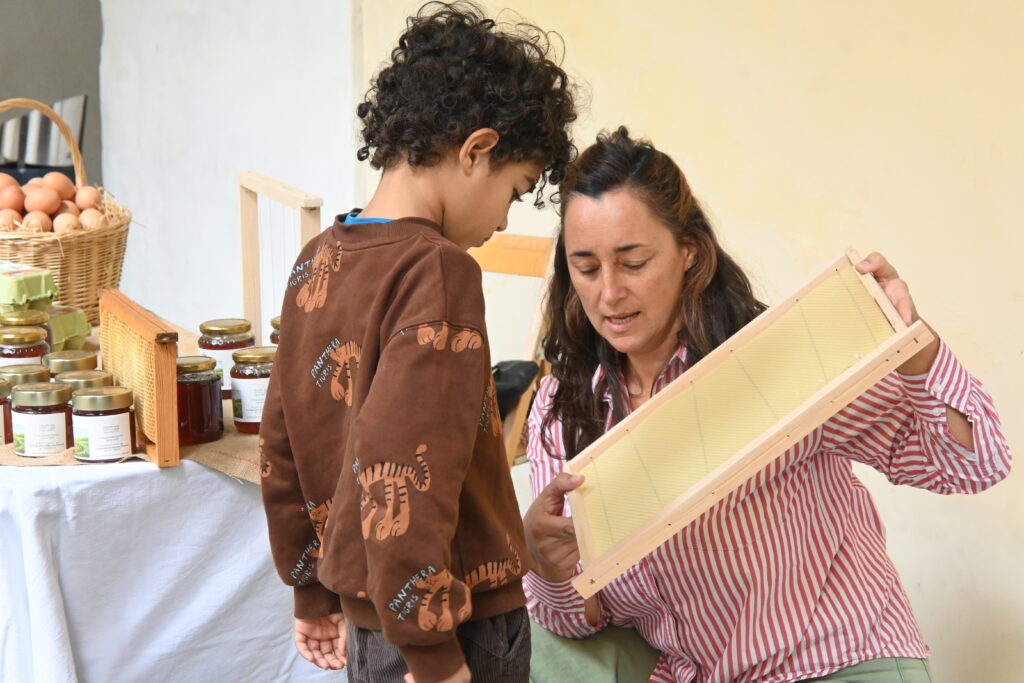
The day itself made this connection between farmers and consumers tangible. Throughout the event, produce from the territory’s agroecological farms was served in the cloister, offering a real taste of the short supply chains that local networks can help strengthen.
Education, Culture, and Youth Stewardship
Keeping these initiatives going over time also depends on involving the younger generation. Schools are an essential part of the network, bringing together knowledge, professional skills, and the territory’s farms and businesses.
Through Terrae Vivae, ecological education programs and school-to-work training take students out into the fields and onto farms, linking classroom learning with hands-on experience. Alessio Fiorucci of the Salvo D’Acquisto agricultural high school in Bracciano spoke about the value of the activities carried out with local farms and how the work will continue with a new program focused on seeds and biodiversity.
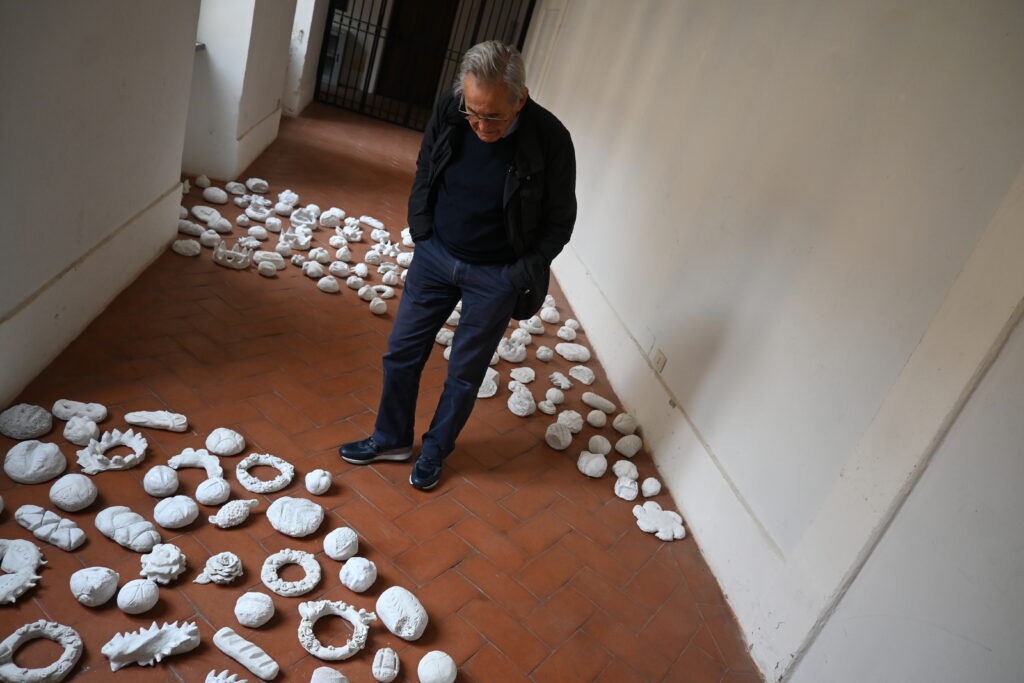
The arts high school at IIS Luca Paciolo contributed “Ars non dat Panem,” an installation exploring bread as food, memory, and cultural heritage. Professor Ravaioli presented the project she developed with her students and fellow teacher Patrizia Santoro, while Professor Giuseppina Tessitore, the school’s site coordinator, spoke about schools’ educational responsibility to encourage informed choices.
From Bracciano to Tubas: Resilience as Solidarity
Relationships built at the local level can also lay the groundwork for new forms of international cooperation, linking communities that are geographically distant but share the need to defend their territories and resources.
With this in mind, Mayor Marco Crocicchi announced that Italy’s Ministry of Foreign Affairs has given its approval for the twinning of Bracciano with Tubas, a Palestinian city in the West Bank. The project grew out of the Cantiere di Pace (Peace Workshop), one of the participatory initiatives run by the town administration, and aims to build a lasting relationship between the two communities, potentially including collaboration on farming and agroecology.
Giacomo Rossetti of GASP (Gruppo di Assistenza e Solidarietà Popolare) described how local associations have helped drive the initiative and keep public attention on the conditions facing the Palestinian population. Access to land and water, the ability to keep farming, and the chance to build cooperative ties are all crucial to daily life in Tubas.
In this context, Ceccarelli also emphasized the importance of seed sovereignty: taking a community’s seeds away strikes at its memory, its identity, and its future. He also raised the possibility of recovering Palestinian varieties preserved in germplasm collections. In this way, cooperation between territories can bring together solidarity, the defense of rights, and ecological regeneration.
From Dialogue to Action
The event set out to do more than compare experiences: it aimed to launch a shared program of work. The proposals that emerged point to a few concrete priorities: strengthening direct relationships between farmers and citizens, experimenting with agroecological practices and local supply chains, making public spaces into places for participation, and keeping young people involved in decisions that affect their territory.
Spaces, production, and markets are not three separate initiatives. They can become parts of a single circular economy strategy, one that creates new opportunities, regenerates ecosystems, and strengthens the territory’s resilience.
The challenge now is to turn these ideas into collective action, working with everyone involved to identify priorities, the resources needed, and shared responsibilities. The work begun through Terrae Vivae and Officine Municipali offers a solid starting point. The aim is not to replace the initiatives already active in the territory, but to bring them into closer connection with one another.
Lucio Cavazzoni, president of the Bio-district of the Bolognese Apennines, also sent a message to the gathering. Cavazzoni is one of the founders of Terra Comune: terra non guerra (Common Land: Land, Not War), an alliance that brings together farming, environmental, and social organizations, bio-districts, trade unions, and Solidarity Purchasing Groups. He called for collaboration that is “more concrete, more hands-on, and without borders,” building cooperation “not on the land or against the land, but with the land,” and urged the mayors present to promote large bio-districts open to everyone’s participation.
As Ruchi Shroff emphasized, “the real future of food begins in our territories,” through processes that connect farmers, schools, young people, associations, and institutions. Stig Tanzmann of the German organization Brot für die Welt (Bread for the World), who joined the event after taking part in the CFS sessions at FAO, also drew this link between the local and the global: “States must listen to voices from the grassroots, from the territories.” Community experiences must be able to help shape international policy, and commitments made in negotiations must translate into tools that genuinely support the agroecological transition.
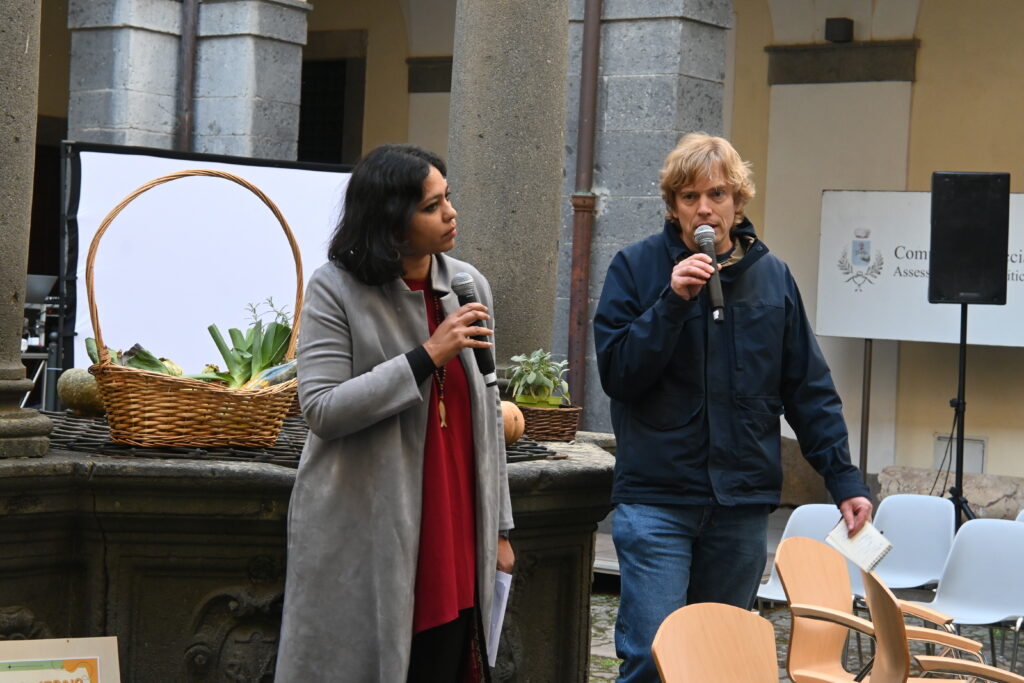
Photo Credits: Navdanya International – Photos 5 and 7: Gabriele Albarello